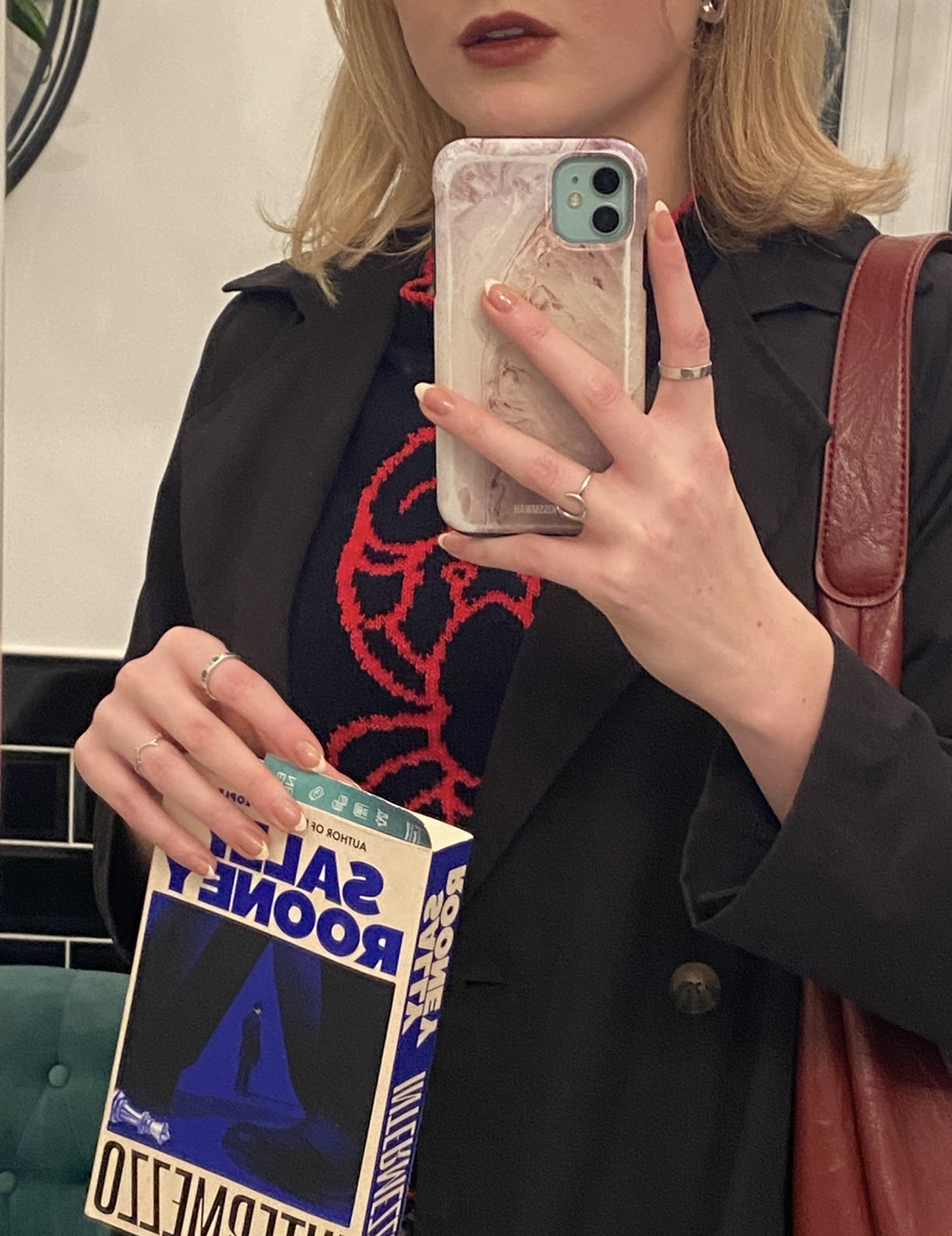
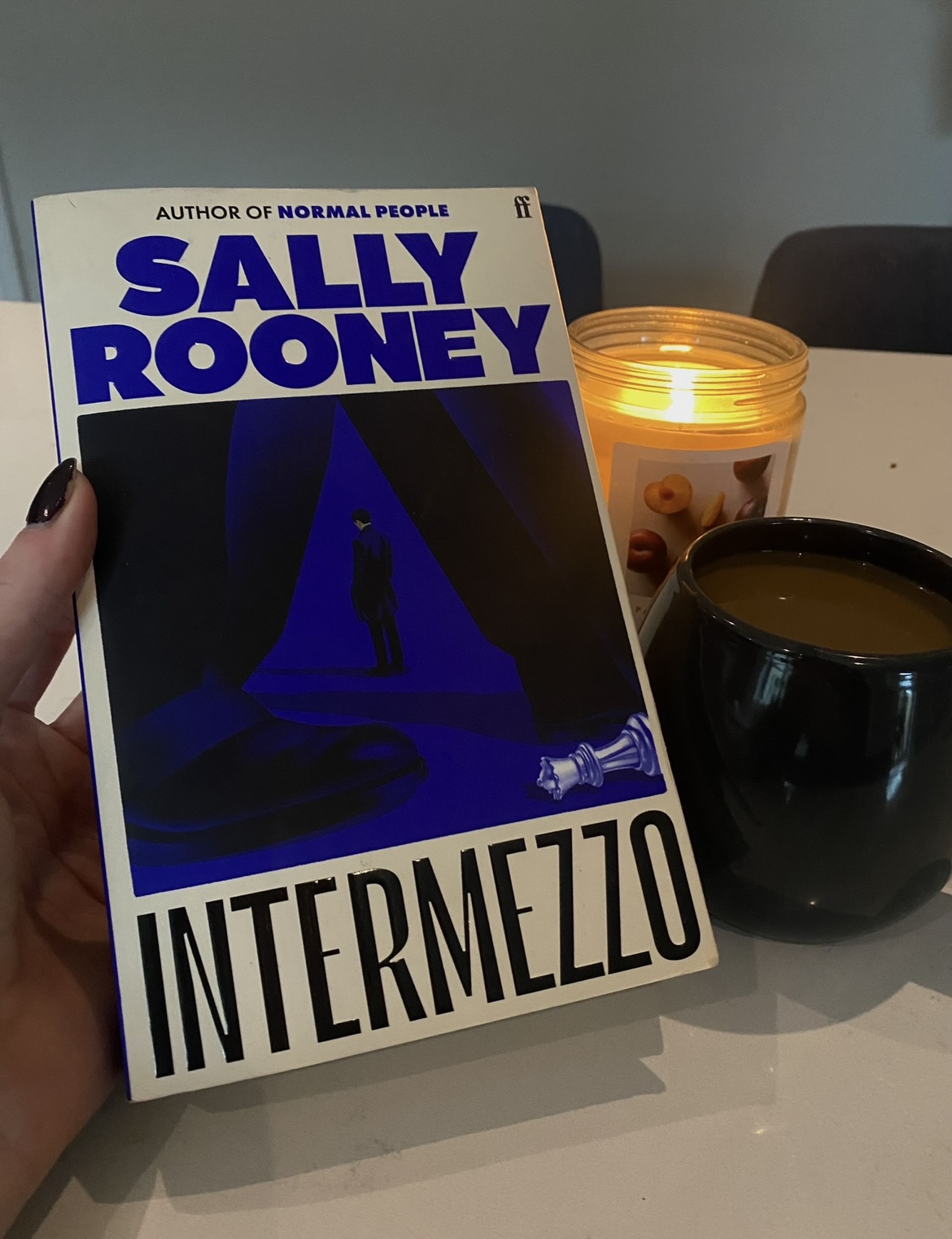
In the wake of their father’s death, two brothers find themselves navigating their way through the uncertain waters of complex modern relationships. Ivan, a young chess prodigy and the younger of the two meets the older, wiser and comforting Margaret. Peter, the eldest, is a cultured yet troubled lawyer caught between yearning for the love of his life, Sylvia, and his current, much younger and riskier girlfriend Naomi.
My first introduction to Sally Rooney was, of course, Normal People. I felt enchanted by her dialogue style and vulnerability and of course, the BBC series was completely addictive.
Last year, when Faber announced the upcoming publication of her third novel, Intermezzo, I was immediately hooked by the classy, navy blue stained marketing campaign and intrigued by the chess motifs. I don’t know how to play chess, but I’ve always wanted to learn – it has that otherworldly academic quality to it and its presence in the book is definitely not as boring as one might think; completely elevating the prose by opening a tunnel directly into Ivan’s brain and revealing exactly what makes him tick.
I don’t think I’m alone when I say that this book has affected me in a way that only the most well-polished and well-articulated books can. There is always an amalgamation of reasons for this, but upon reflection, I have realised that the reason behind this particular novel’s brilliance is its characters; in particular, the way that they speak.
An incredibly human part of life is that we often process things mid-sentence, in real-time –which is exactly what these characters do. Ivan frequently expresses his opinions in a slightly hesitant yet open-minded way: “Honestly, just being near you, I feel really good. Or – I’m sorry, maybe that’s weird.” In return, Margaret gives him the most beautiful gift of all by listening and giving him the space to figure out his thoughts.
With Rooney’s rich and naturally embedded dialogue, it doesn’t seem to matter that the novel consists mainly of long blocks of prose. Most creative writing workshops will tell you that large chunks of description make prose boring: this certainly doesn’t apply here. Every single one of Rooney’s sentences is intentional, slotting together in a mosaic-like pattern to form a novel that is gorgeously honest and observant of the human condition.
Speaking of; equally interesting is the topic of identity, specifically the difference between one’s own perception of one’s identity and the perception one’s family has of one’s identity.
From the get-go, Rooney differentiates between the brothers by splitting the novel into dual perspectives. Peter starts with a bitterly cynical and egocentric narrative that I initially found quite jarring to read due to its jolting and experimental nature – however, when Naomi and Sylvia appear his outlook on life is noticeably more romantic. Ivan’s perspective is more traditional in form, with more varied sentence length. Though the voice is also traditional, it is centred around logic – which we can assume Ivan has absorbed from reading his many theory books on chess strategy over the years.
The brothers’ perceptions of each other, though painful to read at times, were incredibly engaging – particularly Peter’s opinion of Ivan as an “oddball” and as an almost misogynistic person. Peter neglects to realise that Ivan’s views have changed since childhood and that perhaps his awkwardness is not necessarily such a bad trait. It is almost a relief then when Ivan professes his self-consciousness to Margaret and she responds: “You know, everyone in their twenties has these problems you’re talking about.”
As relationships intertwine and Peter is forced to reflect on his opinions of Ivan, he realises that his anxieties about Ivan’s relationship with Margaret stem from anxieties about the age gap in his relationship with Naomi. When these feelings are expressed and resolved in the confrontations during the last few chapters, it is beautiful to watch both brothers accept their respective flaws and express their love for each other.
Two months after reading this stunning novel, I am still thinking about it. There is nothing so bitter-sweet as feeling the pages of a good novel dwindle in your right hand as you eagerly drink in the ones on your left. I suppose I will have to fill this hole with other complex characters – maybe Conversations With Friends is next? If you have any similar recommendations for me, feel free to leave comments on the Insta blog post on @allmydogearedpages; I’d love to hear your reviews too 🙂
5 stars for Intermezzo (Thank you, Sally Rooney, we all say in unison)!
love, Meg 🙂
 Home
Home 