

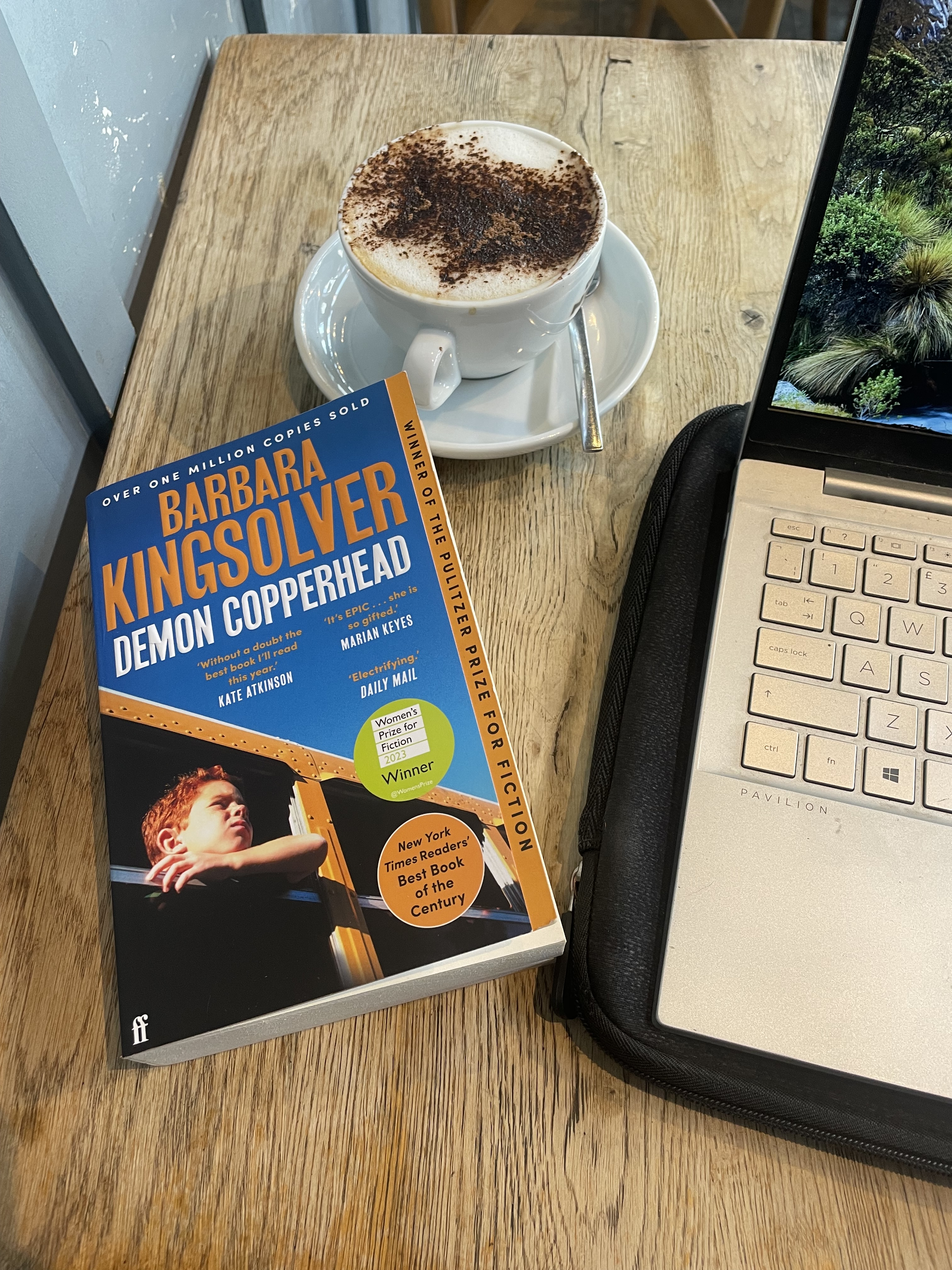
Born in rural Appalachia, amid the opioid crisis, Damon Copperhead (or, as readers come to know him, Demon) enters the world looking like “a little blue prizefighter”. With no father in the picture, Demon spends most of his early childhood roaming around with his best friend Maggot until his drug-addicted teenage mother loses custody of him and he falls down the shadowy rabbit hole of the American child protection services.
I’m ashamed, first of all, to admit that I managed to get a quarter of the way through this novel before finding out that it’s loosely based on Charles Dickens’ David Copperfield, despite its title being a dead ringer for the famous classic. I’m even more ashamed to admit to having never actually read David Copperfield, but I suppose it saved me a lot of spoilers in the long run — and boy, did I not see any of the plot points in this novel coming.
Off the bat, I could tell that this wasn’t going to be like any other book I have read. Kingsolver expertly delivers the lingering imagery that readers would expect from a Pulitzer Prize-winning novel, though not in the way that you might expect. Rather, we see the world through the lens of a boy with the odds stacked against him, resulting in language that is vivid and stubborn – tainted in the best way by Demon’s quick wit and Appalachian accent.
The characters, as always, are the best part of this novel. Of course, it’s impossible not to fall in love with our narrator, Demon, but the likes of the Peggots, Tommy, and Angus all come a close second. Above all the lousy cards dealt their way, these characters are kind, hopeful, and loyal; capable of what most of the adults in Demon’s life are not: sticking around.
Like Dickens, Kingsolver smoothly manoeuvres her readers through endless exploits— in this case, road trips, run-ins with the law, and dark situations that no kid should ever be subject to. This is a large novel – there’s no denying it. However, at no point does it drag or preach. Whilst readers are indeed hit with wave after wave of Demon’s misfortunes, they are never repetitive or fruitless.
The opioid crisis looms in the background of this novel like an omnipresent villain. Kingsolver forces readers to view addiction as a systemic tragedy as opposed to a moral failing. Through Demon’s eyes, we witness how quickly addiction can take hold—from his mother’s Oxy dependencies to his own struggles with prescribed medications—revealing the complex web of poverty, despair, and chemical dependencies that plague these rural communities.
When it comes down to it, even after he’s grown in every meaning of the word, Demon remains that little boy from rural Virginia who just wants to see the ocean. The triumph of Kingsolver’s narrative is that, regardless of what life throws at Demon, we find ourselves turning page after page with the unwavering hope that one day he might get to see that shoreline after all.
 Home
Home 